
I used to be one of those students who understood things easily and consistently got good grades. Lately, I’m studying but struggling to concentrate, falling behind, and getting grades I never used to get—and I honestly don’t understand what changed.

Maybe You Didn’t Suddenly Become a Bad Student
When you’re used to doing well, struggling can feel strangely personal. But academic ability isn’t fixed. A change in your performance doesn’t automatically mean your intelligence disappeared.
Students often face the same frustrating pattern: wanting to study, making plans to study, and still finding themselves unable to concentrate or get started.
The more useful question is not What’s wrong with me? It’s What changed?
Your Old Way of Studying May Not Work Anymore
You may not have become worse at learning. Your classes may simply require something different now.
Earlier, you might have been able to reread your notes the night before a test and do well. As subjects become harder, you often need deeper understanding, practice, problem-solving, and regular revision.

If you’re spending hours studying but very little of that time involves actually recalling or applying what you’ve learned, more hours won’t necessarily solve the problem.
Try identifying the exact point where things stopped making sense. Is it one subject? A particular type of question? Remembering information? Starting assignments? That answer matters.
Stress, Sleep and Your Life Outside School Matter Too
School doesn’t happen inside a vacuum. A friendship problem, family conflict, relationship, financial worries, loneliness, or constant pressure about your future can occupy mental space even when you’re sitting with a textbook.
Sleep matters too. The CDC notes that insufficient sleep can make concentration harder and is associated with poorer academic performance. Adolescents generally need 8–10 hours of sleep each night.
So before calling yourself lazy, look at what your brain has actually been dealing with.
Don’t Try to Fix Everything at Once
When your grades start dropping, the instinct is often to create an extreme schedule: study for ten hours, wake up earlier, delete every app, and completely change your life overnight. That usually isn’t necessary.
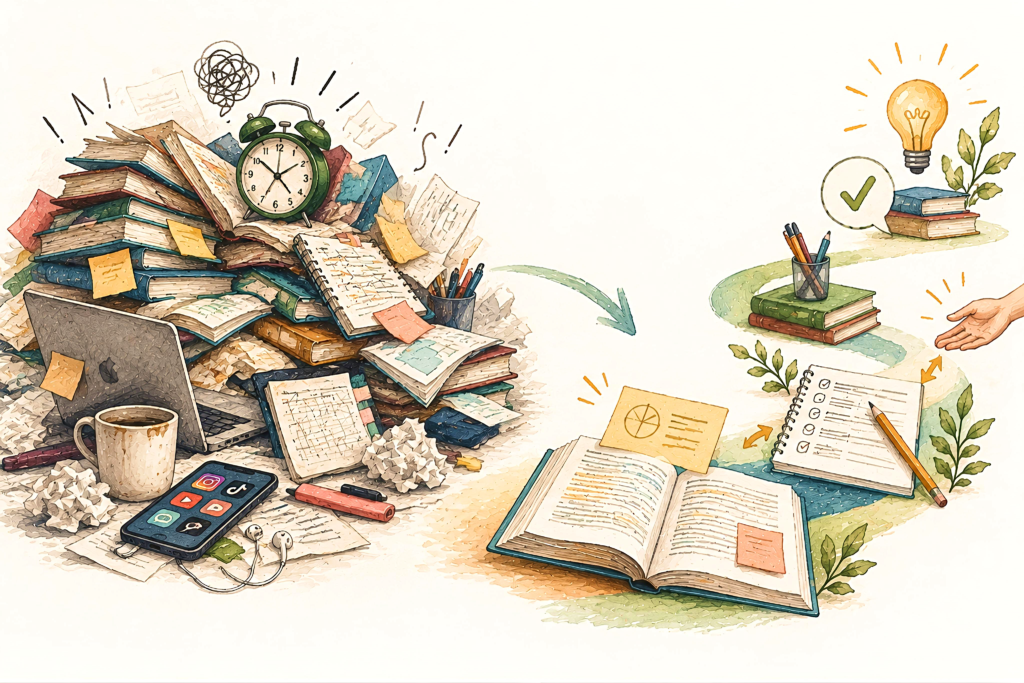
Pick the subject where you’re struggling most. Find the first topic you don’t properly understand. Work on that one gap. Use practice questions instead of only rereading. Study in manageable sessions. Get help from a teacher, tutor, classmate, or trusted adult when you’re stuck.
The goal isn’t to prove that you can suffer through more hours. It’s to make studying effective again.
You Haven’t Lost the Student You Used to Be
The version of you who once did well hasn’t disappeared because your grades changed. Maybe you’re dealing with harder material. Maybe your routine has fallen apart. Maybe you’re exhausted. Maybe anxiety or something happening outside school is making concentration difficult. Or maybe you simply need a completely different way of studying now.
If the change is persistent and comes with major changes in mood, sleep, motivation, concentration, or your ability to function outside school, don’t ignore it. Talking to a trusted adult or qualified professional can help you understand what’s happening.
You don’t need to become your old self again. You need to understand what changed and give yourself the right support to move forward.