
“At home, I can solve the questions. I understand the chapter, remember the formulas, and sometimes even explain everything to someone else. Then I sit down for a school test and suddenly my mind feels empty. I look at a question I studied yesterday and feel like I have never seen it before. Then I panic because I know I know this.”

That experience can be incredibly frustrating. It can make you question whether you studied properly or whether something is wrong with your memory.
But knowing something at home and being able to retrieve it under pressure are not always the same thing.
Why Does My Mind Go Blank?
Tests can create a very different mental state from studying in your room. Knowing you’re being judged can trigger a stress response.
You may not even feel dramatically anxious. It can show up as a racing heart, tense muscles, shallow breathing, or suddenly being unable to organize your thoughts.
High stress can interfere with attention and memory retrieval, which can make information you know feel temporarily inaccessible.
The information hasn’t necessarily disappeared.
Could My Studying Be Part of the Problem?
Sometimes you genuinely know the material, but sometimes you mainly recognize it when you see your notes.
Reading a chapter repeatedly can create the feeling that you know it because everything looks familiar. A test asks you to retrieve the information without those cues.
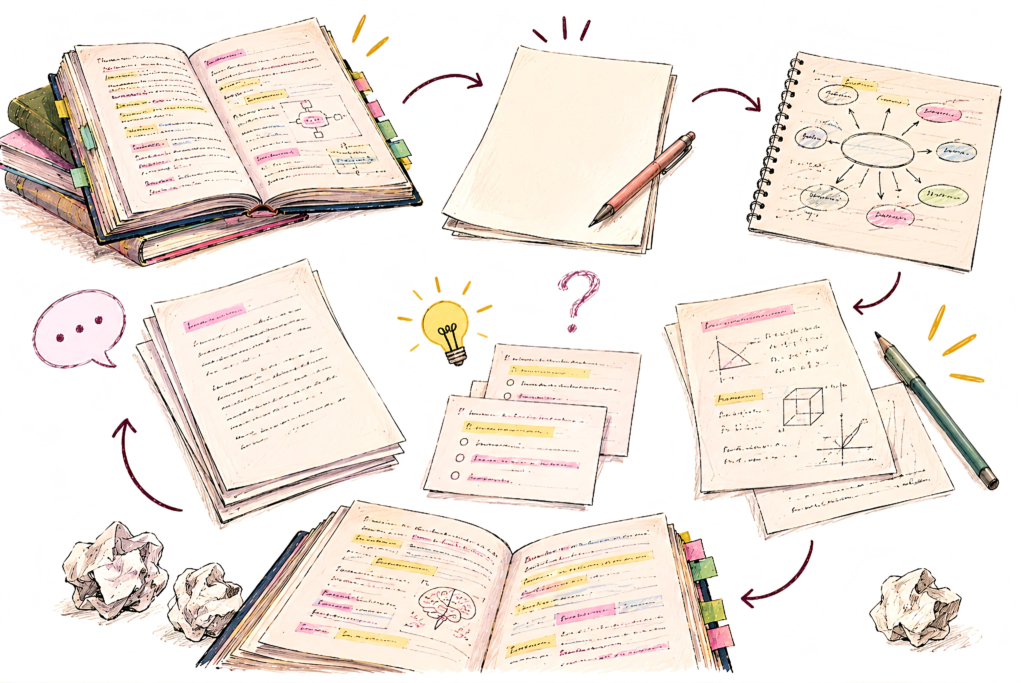
Close your book and explain the topic from memory. Solve questions without looking at the answer. Write what you remember on a blank page.
These methods show what you can actually retrieve.
Why Am I Fine at Home but Nervous at School?
Home may feel safe and predictable. A classroom test has a clock, other students, a teacher, marks, and the possibility of getting something wrong.
You may start thinking about consequences instead of the question: “What if I fail?”, “Everyone else is writing” or “I’m running out of time.” That mental noise takes up attention.
Timed practice and mock tests can help because the exam environment becomes less unfamiliar.
What Should I Do When I Blank Out?
Don’t immediately decide that you’ve forgotten everything.
Put both feet on the floor and take a couple of slow breaths. Read the question again. Underline the important words. Write down any formula, fact, keyword, or first step you remember, even if it seems incomplete.
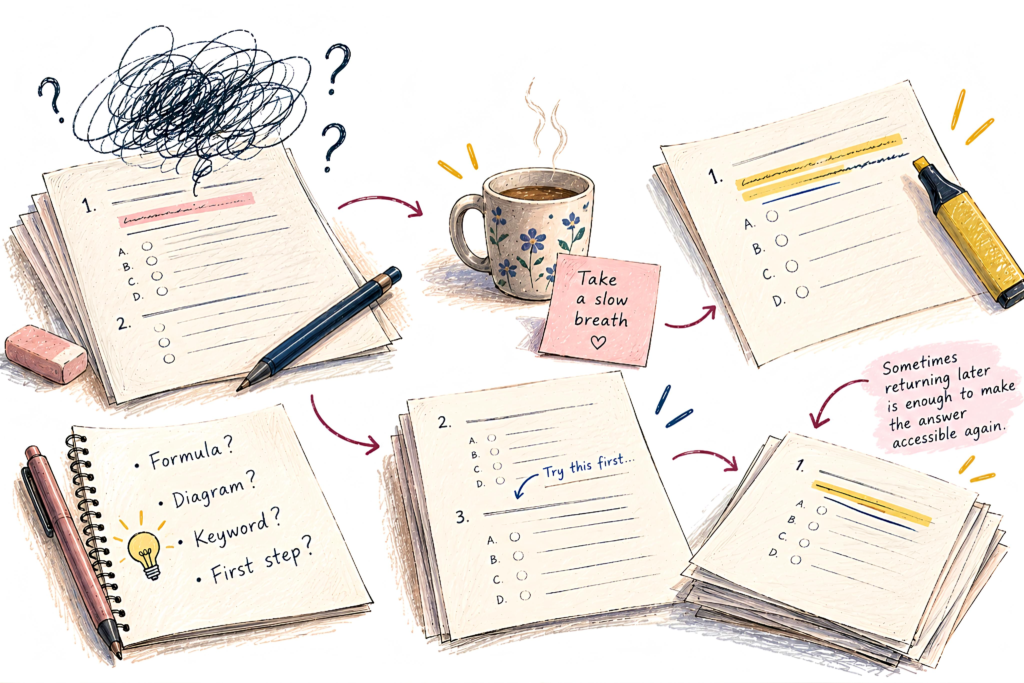
If nothing comes, skip the question and answer something you know.
Coming back later can be surprisingly helpful because your brain may retrieve the information once the immediate pressure has dropped.
Practice this routine during mock tests.
How Can I Make Tests Feel Less Scary?
Don’t make every study session comfortable and open-book. Regularly recreate the conditions that make you nervous: set a timer, close your notes, sit somewhere unfamiliar, and complete questions without help.
Protect the basics too. Sleep, food, hydration, and breaks matter for concentration. And if you repeatedly study well but freeze during tests, talk to a teacher, school counsellor, parent, or mental-health professional.
Test anxiety can be worked on; you don’t have to keep accepting poor marks as proof that you aren’t capable.
The goal isn’t to eliminate nerves, it’s to know what to do when they suddenly appear.
The fact that you can answer the question at home matters. You haven’t suddenly become less intelligent when you enter the classroom. You may simply need to practice retrieving what you know under pressure.