“I don’t know this person well enough to know whether I’m overreacting, but his messages are making me uncomfortable. I don’t want to be unnecessarily rude, yet I also don’t want to keep replying just because I feel guilty about ignoring him.”

You Don’t Have to Keep Being Polite
It can feel surprisingly difficult to ignore someone who hasn’t technically done anything threatening. You may worry that blocking them will make you seem mean, or that you should give them a chance because they might have harmless intentions.
But you don’t need to establish that someone is a bad person before deciding you don’t want contact with them.
If a stranger makes you uncomfortable, you are allowed to stop responding. You don’t owe them your attention, an explanation, or a conversation simply because they reached out. And if you’ve already made it clear that you don’t want to talk, you don’t need to keep explaining yourself. Other women discussing similar situations often arrive at the same practical answer: stop engaging and block the person.
Decide Whether You Want to Say “Stop” Once
If you haven’t responded at all, you have two reasonable choices.
You can continue not responding and block the account. Or, if you feel comfortable doing so, you can send one clear message such as, “I’m not interested in continuing this conversation. Please don’t message me again.”
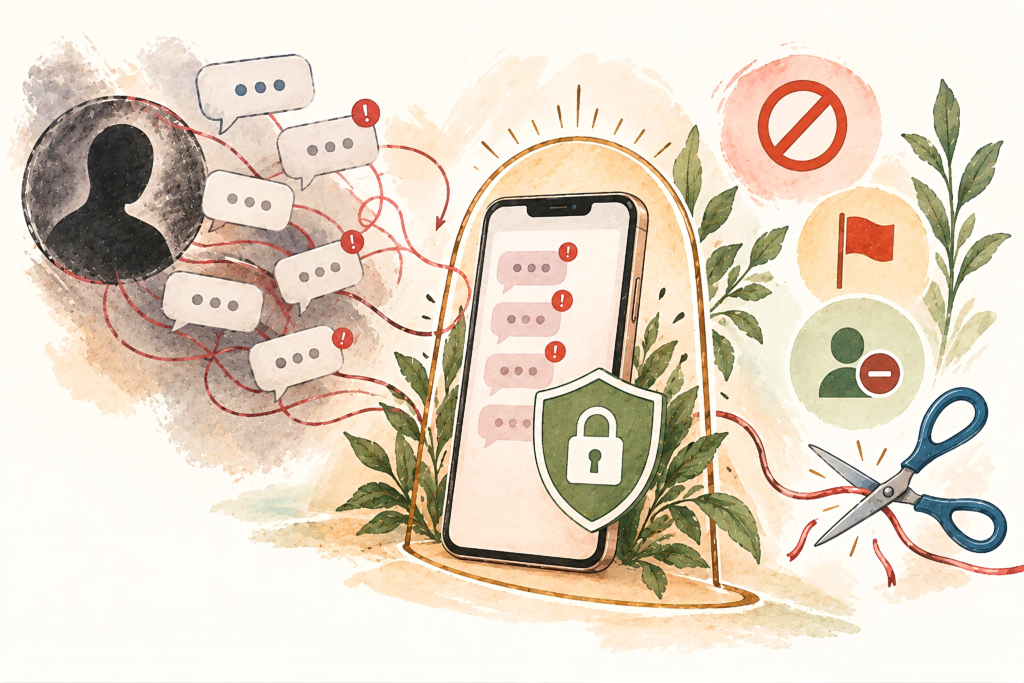
Then stop engaging. You don’t need to explain why. You don’t need to soften it with an apology. And you don’t need to debate his response if he asks what he did wrong.
If you think replying could encourage more contact, skip the message completely. For some unwanted or suspicious messages, responding can simply confirm that your account or number is active.
Block Him Without Waiting for Something Worse
Blocking someone isn’t an accusation. It’s a boundary.
If you don’t want a stranger contacting you, you can block the account and use the platform’s reporting tools if appropriate. You can also review your privacy settings so fewer strangers can message you, follow you, or access information about you.
You don’t have to wait until the messages become sexual, insulting, threatening, or frightening before deciding that you’ve had enough.
At the same time, don’t get drawn into repeatedly checking whether he has created another account. If he keeps returning, document what is happening and keep blocking rather than getting pulled back into the conversation.
Save the Messages If the Situation Feels Wrong
Before deleting everything, consider taking screenshots of the messages, username, profile and dates.
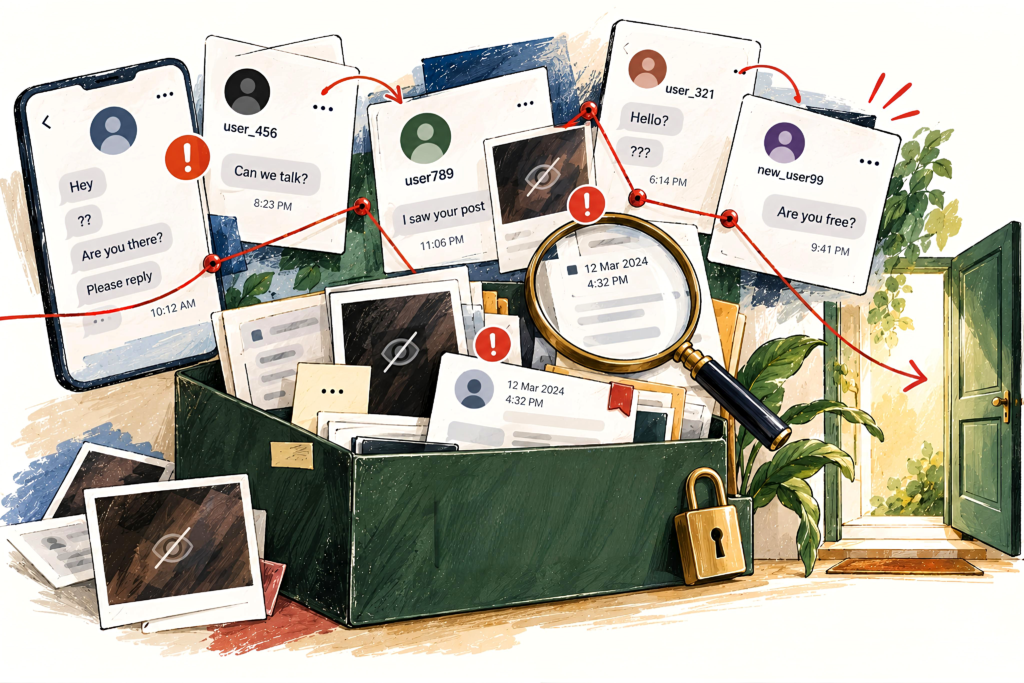
This becomes especially useful if the person starts using different accounts, threatens you, sends unwanted sexual material, mentions personal information about you, or tries to contact your friends or family. Keeping records can help establish a pattern if you later report the behaviour.
You don’t have to decide immediately whether the situation is serious enough to report. Saving the evidence simply keeps your options open.
Trust the Feeling That Something Isn’t Right
You don’t need to diagnose the stranger’s intentions.
Maybe he’s simply socially unaware. Maybe he’s looking for attention. Maybe he’s trying to scam you. Maybe he’s genuinely interested. Or maybe his behaviour could become more concerning.
You cannot know that from a few messages. What you can know is how the interaction makes you feel and whether he respects your boundaries.
If he becomes threatening, starts following you online or offline, creates multiple accounts to reach you, reveals that he knows where you live or work, threatens to share private information or images, or makes you fear for your physical safety, involve someone you trust and consider reporting the behaviour to the platform and appropriate local authorities.
You don’t have to prove that a stranger is dangerous before you protect yourself. If you don’t want contact, that’s enough. You can ignore, block, report and walk away without feeling guilty for choosing your own comfort and safety.