
“I never used to think twice about what I wore at home. Now, before putting on a pair of shorts or a sleeveless top, I find myself wondering what my mother-in-law will say. Sometimes she makes a direct comment. Other times, it’s just a look or a passing remark. But somehow, I’ve started changing my clothes before she even says anything.”

It’s strange how quickly someone else’s opinion can become a voice in your own head.
Maybe she comments on your shorts. Maybe she doesn’t like sleeveless clothes. Maybe she thinks you should dress more traditionally around the family. Or maybe it’s something as small as a comment about your T-shirt.
Individually, these comments might seem insignificant. But when they happen repeatedly, getting dressed can start to feel like something you need permission for.
It’s not really about the clothes
When someone comments on your appearance repeatedly, you can start feeling watched.
You may begin checking yourself before leaving your room, changing outfits unnecessarily, or wondering what someone else will think before deciding what to wear. That’s why the discomfort can feel bigger than the original comment.
The issue isn’t necessarily that your mother-in-law has an opinion about clothes. Everyone has preferences.
It’s that her opinion has started affecting how freely you make your own choices.
Her idea of appropriate may be different from yours
Your mother-in-law may have grown up with completely different expectations around clothing.
Perhaps women in her family dressed more traditionally at home. Perhaps certain clothes were considered inappropriate around elders or she simply has a conservative personal preference.
Understanding that can make her behavior easier to interpret. But understanding someone’s background doesn’t mean you have to adopt all of their preferences.
Two generations living together can have very different ideas about what feels normal.
Decide where you’re actually willing to compromise
Not every clothing disagreement needs to become a battle.
There may be family occasions where dressing more traditionally feels appropriate to you too. There may also be everyday situations where you simply want to wear comfortable clothes at home. Think about where you genuinely feel comfortable compromising and where you’re changing only because you’re afraid of criticism.
That distinction can stop every comment from becoming an internal debate.
Stop checking for approval before getting dressed
If you’ve started thinking about your mother-in-law before choosing every outfit, deliberately interrupt that habit. Choose your clothes based on the occasion, comfort, weather, activities, and your own preferences.
If an outfit is appropriate for the situation and you feel comfortable wearing it, you don’t need to mentally predict everyone’s reaction before putting it on.
It may take some time to get used to this again if you’ve been second-guessing yourself for a while.
Don’t turn every comment into a confrontation
Some comments are worth addressing. Others can simply be someone’s personal opinion that doesn’t require a response.
If your mother-in-law occasionally mentions that she prefers traditional clothes, you don’t necessarily need to turn it into a larger family discussion. You can acknowledge that people have different preferences and move on.
Saving your energy for repeated or genuinely intrusive behavior can make the situation much easier to manage.
But notice when it becomes a pattern
There’s a difference between having an opinion and trying to control someone.
Pay attention if the comments become frequent, humiliating, or increasingly restrictive. For example, it is more concerning if you’re regularly being told what you are allowed to wear, criticized in front of relatives, pressured to change immediately, or made to feel ashamed of your body.
At that point, the issue isn’t really fashion anymore. It’s about control and how comfortable you’re allowed to be in your own home.
Talk to your husband before resentment builds
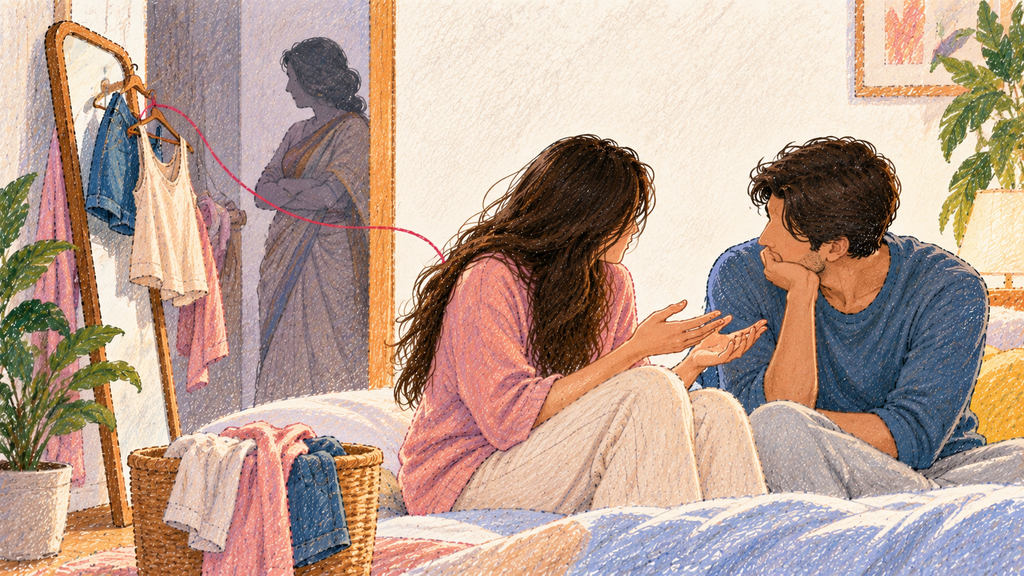
If this is happening regularly, your husband should know how it is affecting you. You don’t need to turn the conversation into an attack on his mother.
Explain the pattern, how it has changed your behavior, and what kind of support would make the situation easier. A supportive partner can help prevent small family disagreements from becoming a constant source of tension.
If appropriate, he can also help establish that your clothing choices don’t need to become a recurring family discussion.
If you’re living with your in-laws, shared space matters too
Having personal freedom doesn’t mean ignoring everyone around you.
When several generations share a home, there can be reasonable differences in expectations, especially around common areas and family gatherings. Being considerate can be a good thing. But consideration works both ways.
A healthy household leaves room for adults to have different preferences without turning every difference into criticism.
The goal isn’t to prove that your way is always right. It’s to find a level of mutual respect that allows everyone to live comfortably.
Don’t let one person’s opinion become your inner voice
This may be the most important part. If you hear enough criticism, eventually you may start criticizing yourself before anyone else gets the chance.
You look at an outfit and immediately think:
She won’t like this.
Maybe I shouldn’t wear it.
What will everyone think?
That’s when an external opinion has become an internal rule.
When you notice yourself doing this, pause and ask whether you actually have a problem with the outfit or whether you’re anticipating someone else’s reaction. That small distinction can help you separate your own preferences from other people’s expectations.
You don’t have to choose between respect and individuality
Respecting your mother-in-law doesn’t mean you must agree with all her opinions.
You can be considerate of family customs without giving up every personal preference. And you can listen when someone offers advice without treating that advice as a command.
Living with another family may require some adjustment. It shouldn’t require you to stop feeling like yourself.
Your clothes are allowed to be a personal choice not a daily test of whether you’re a good daughter-in-law.