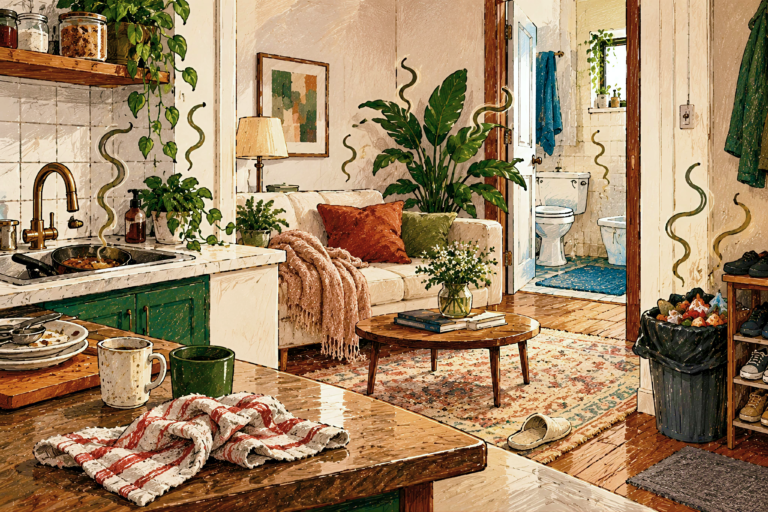
“I’ll see the overflowing dustbin, the dishes sitting in the sink, the dirty floor, or things left lying around, and somehow everyone else seems completely fine with it. Then I end up cleaning because I can’t stand looking at it anymore.”
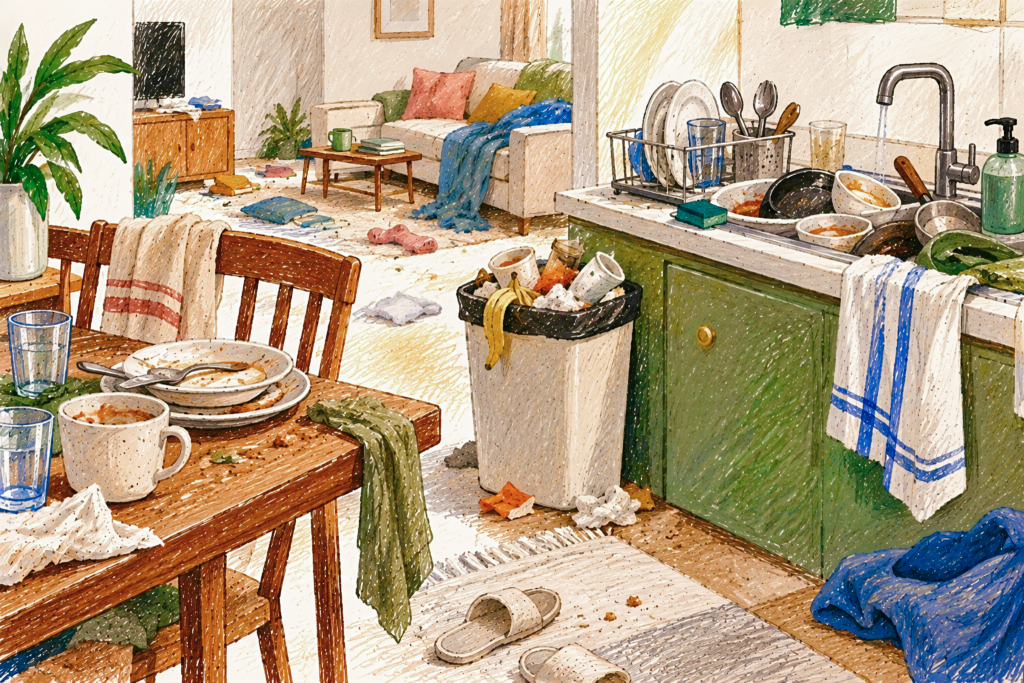
Sometimes the exhausting part isn’t even the cleaning.
It’s being the person who sees everything that needs to be done.
You notice the crumbs on the counter. You remember that the bathroom hasn’t been cleaned. You realise the laundry needs folding. You see that nobody replaced the toilet roll.
And once you’ve noticed it, it’s difficult to unsee it.
Why Does It Feel Like Nobody Else Notices?
Part of the problem may be that people genuinely have different standards for what feels “dirty” or “messy”.
One person can walk past a full sink without thinking twice. Someone else can walk into the kitchen and immediately feel irritated by it.
But sometimes something else is happening too.
You may have gradually become the person responsible for keeping track of the house. Once everyone knows that you will eventually notice something and deal with it, they don’t have much reason to develop the same awareness.
This is part of what researchers call mental load: the invisible work involved in noticing, remembering, planning and organizing household responsibilities. Researchers have found that this cognitive side of housework has been distributed unevenly among women.
So you aren’t necessarily doing more cleaning because you love cleaning.
You may be doing more because you’re carrying more of the responsibility for remembering that cleaning needs to happen.
Am I Actually Too Sensitive About Mess?
Maybe your standards are higher than everyone else’s. And that’s not automatically a problem.
If a slightly messy table genuinely doesn’t bother your family, you don’t have to convince them that it should.
But there’s a difference between having a higher standard and becoming the unpaid manager of everyone’s mess.
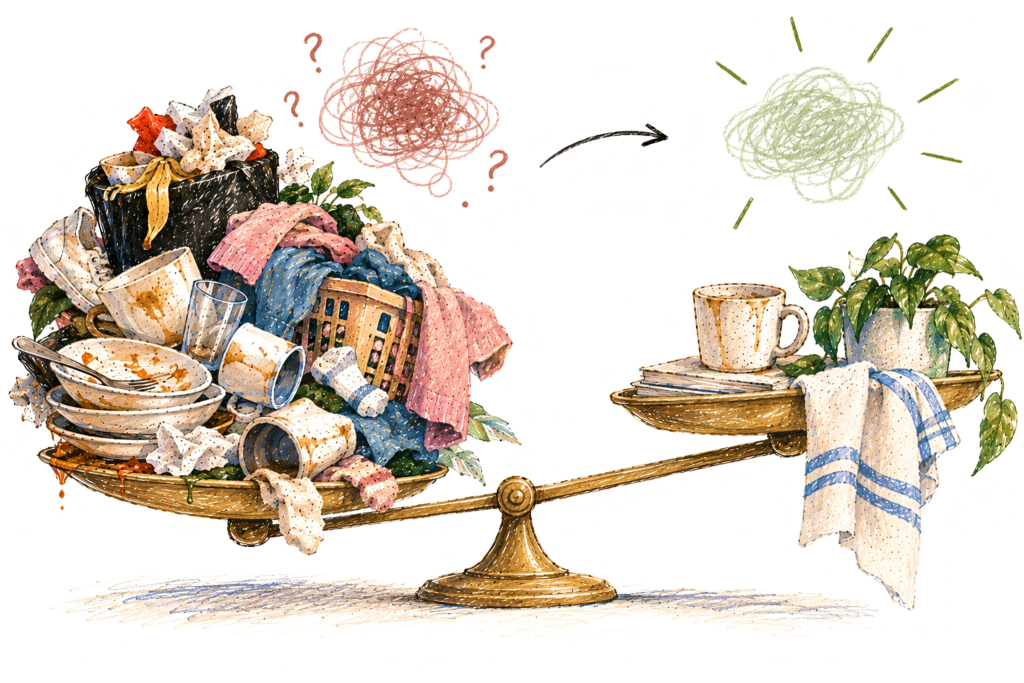
If you feel irritated because you clean things others could handle, ask whether you take on responsibilities that aren’t yours.
Sometimes you can leave something alone and allow the person who created the mess to eventually deal with it.
Why Does It Make Me So Angry?
Because it can feel incredibly unfair.
Imagine spending your morning cleaning the kitchen and then watching someone leave their dishes there five minutes later.
The frustrating part isn’t just the dish.
It’s the feeling that your effort doesn’t matter because everyone expects you to take care of things anyway.
Women can experience the ongoing responsibility for household management as particularly burdensome, partly because these tasks are repetitive, never completely finished, and often receive little recognition.
That can create resentment over time.
What If I Stop Cleaning Everything?
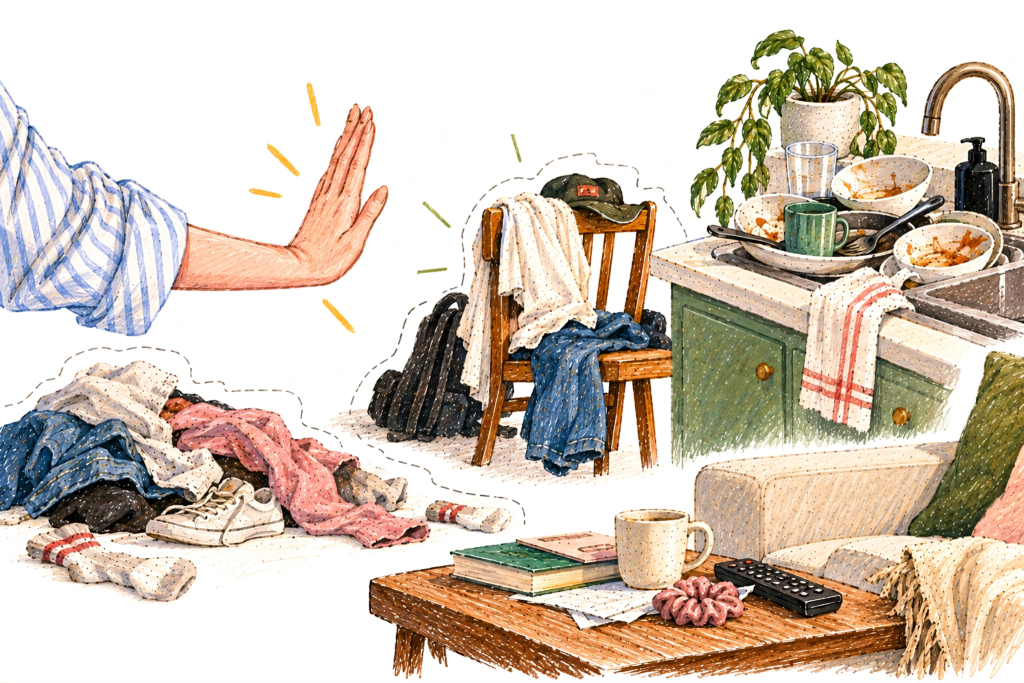
You don’t have to suddenly let your entire house become a disaster to prove a point.
Start smaller. Separate your responsibility from everyone else’s responsibility.
If an adult family member leaves their dishes in the sink, don’t immediately wash them. If someone repeatedly leaves their belongings in a shared space, let them experience the inconvenience of having to deal with them.
This isn’t about being passive-aggressive.
It’s about stopping the assumption that you will automatically clean up after everyone.
If you live with a partner or family members, discuss household responsibilities as shared duties instead of dividing them by who complains first about the mess.
You Don’t Have to Notice Everything
You don’t have to train yourself to stop caring about cleanliness. But you can stop treating every imperfection in the house as a task that belongs to you.
The house doesn’t have to be perfectly clean every day.
Your home is supposed to be somewhere you live, not somewhere you constantly maintain for everyone else.
And if you’re always the person noticing what needs to be done, try asking yourself one question before you get up to fix it:
“Does this actually need to be done by me?”
Sometimes the answer will be yes. But sometimes, for your own peace, the answer can simply be no.
You are allowed to live in your home without carrying the entire house around in your head.