“Why is the skin around my mouth darker than the rest of my face? I keep noticing the pigmentation whenever I look in the mirror, and now I feel like it’s the first thing other people notice too.”
Pigmentation around the mouth can be surprisingly frustrating.
You may have an otherwise even complexion, but the area around your lips looks slightly brown, greyish or darker than the rest of your face.
Sometimes it’s most noticeable above the upper lip. Sometimes the corners or the skin below the mouth look darker. And because it’s right in the middle of your face, it’s very easy to become self-conscious about it.
But darker skin around your mouth doesn’t automatically mean something is wrong with your skin.
Why Is the Skin Around the Mouth Darker?
There isn’t one single reason.
Your skin produces melanin, the pigment responsible for your natural skin color. When the skin produces more melanin in a particular area, that area can appear darker than the surrounding skin. Hyper-pigmentation can happen for several reasons, including inflammation, irritation, sun exposure and certain skin conditions.
For some women, the pigmentation may also be related to melasma. Melasma commonly appears on the face and can affect the area above the upper lip. Sun exposure and hormonal changes are among the factors associated with it.
This is one reason it’s difficult to say that everyone’s pigmentation around the mouth has the same cause.
Can Irritation Make It Worse?
Yes.
Repeated irritation or inflammation of the skin around your mouth may result in darker pigmentation. This is known as post-inflammatory hyperpigmentation and is particularly common in medium to darker skin tones.
Think about how often that area gets touched.
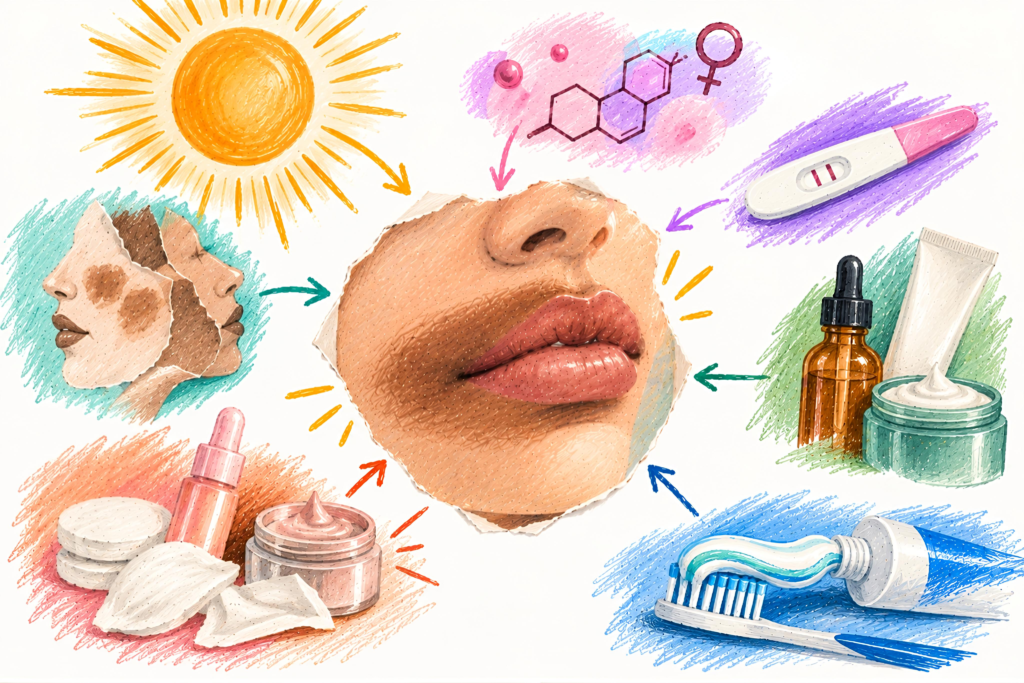
Toothpaste can come into contact with the skin. You may wipe your mouth frequently, experience dryness, use strong skincare products, remove facial hair, or have irritation from a product.
That doesn’t mean any one of these is definitely causing your pigmentation. But if the area is constantly irritated, it’s worth paying attention to what you’re putting on it.
What About Sun Exposure?
This is an easy one to underestimate.
Even when you’re careful about the rest of your skincare routine, regular sun exposure can make pigmentation more noticeable. Sunlight stimulates melanin production and can darken existing pigmentation.
If you’re trying to improve pigmentation, daily sun protection is therefore much more useful than constantly adding new brightening products. And if you have melasma, sun protection is an important part of treatment because UV exposure can worsen it.
Does Having Pigmentation Mean I Have a Skin Problem?
Not necessarily.
Some pigmentation is simply a variation in skin colour. Other times, there may be an underlying cause that needs to be identified.
That’s why it’s better not to diagnose yourself based on photographs or compare your skin with someone else’s.
If the pigmentation appeared recently, is getting noticeably darker, keeps spreading, or comes with itching, scaling, redness or other changes, it’s worth seeing a dermatologist. Skin discoloration can have many causes, and a dermatologist can examine the area and determine what you’re actually dealing with.
What Can I Do About It?
Start with the basics rather than attacking the pigmentation with every product you find online.
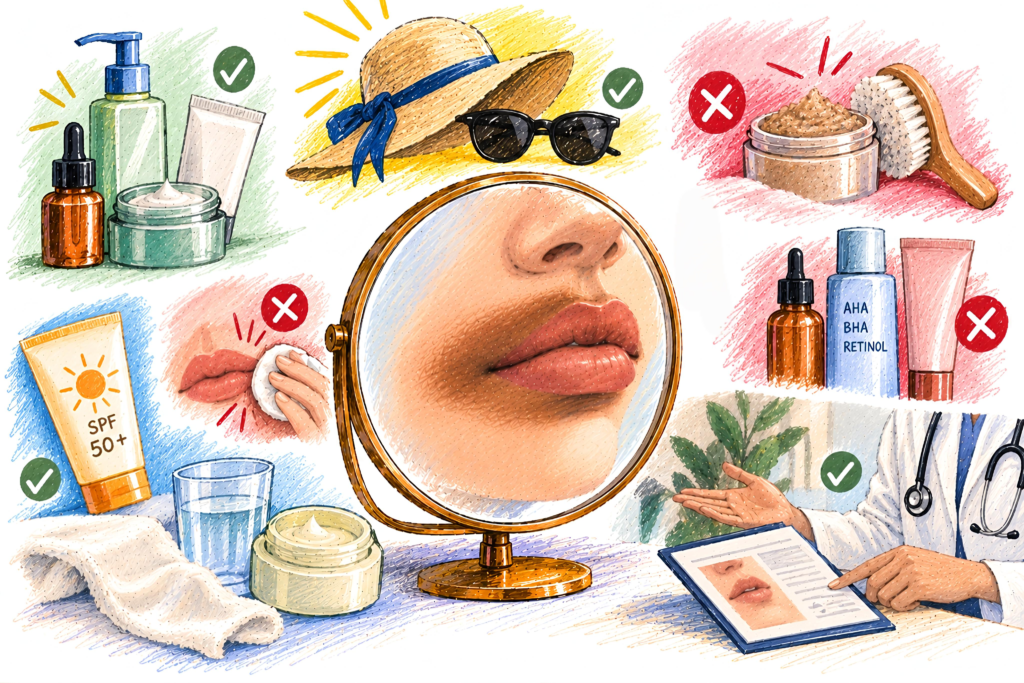
Be gentle with the skin around your mouth. Avoid repeatedly scrubbing or irritating it. Use sunscreen regularly, especially if you’re spending time outdoors.
If you’ve recently introduced a strong skincare product and the area has become irritated, consider whether that product could be contributing to the problem. And if the pigmentation isn’t improving or you’re unsure what is causing it, see a dermatologist rather than continuing to experiment.
Treatment depends on the cause. For conditions such as melasma, dermatologists may recommend a combination of sun protection and specific prescription or topical treatments depending on the person’s skin and the depth and type of pigmentation.
And Please Don’t Let It Become the Only Thing You See
There’s another side to pigmentation that skincare advice often misses.
Once you become aware of a darker area around your mouth, you can start checking it constantly. You notice it in bathroom mirrors, phone cameras and harsh lighting. You may even start wondering whether people are looking at it when they’re actually just talking to you.
You are seeing your face from inches away and analyzing one particular area. Other people usually aren’t.
It’s completely okay to want your skin to look more even. You can treat pigmentation if it bothers you. But you don’t have to spend every day feeling like your face needs to be corrected before you can feel attractive.
Your skin can have pigmentation and still be beautiful. And if you decide to treat it, do it because you want to care for your skin not because you believe you need to hide it.