
“I never know exactly when my period is going to come. One month it arrives a few days early, the next month it is late, and I keep wondering whether something is wrong with my body. I track everything, but my cycle still doesn’t seem to follow a perfect schedule.”
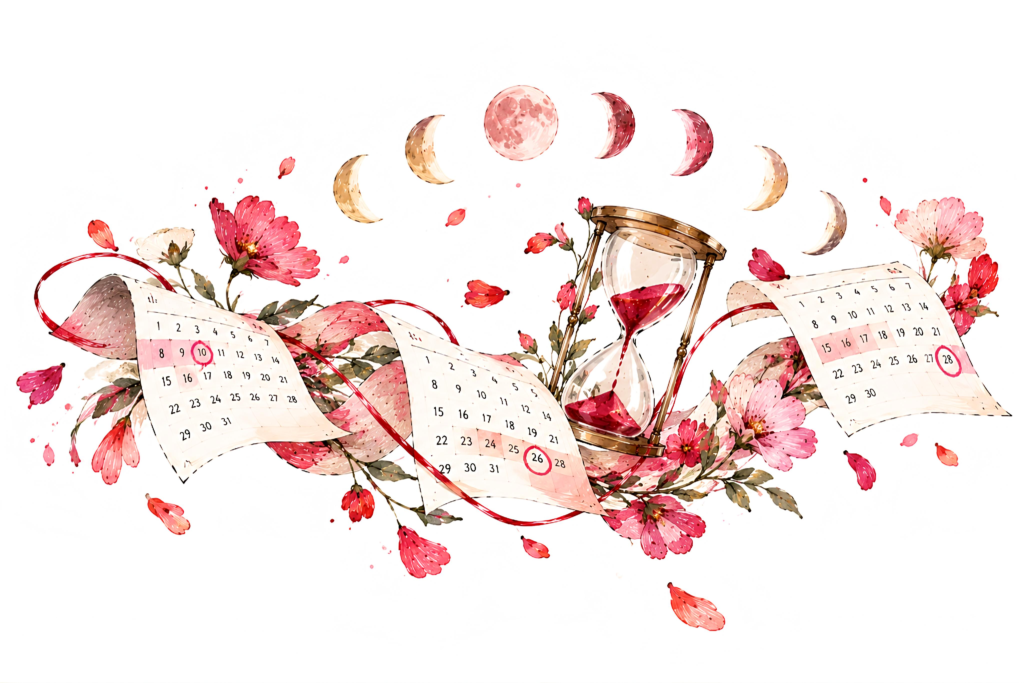
The reassuring part is that a period does not have to arrive on the same calendar date every month. A little variation can be normal. What matters more is understanding your usual pattern and noticing when something changes.
This is also why a period tracker is better treated as an estimate than a promise. Apps predict based on previous cycles, while your body responds to what is happening at that moment.
Is a Few Days Early or Late Normal?
A menstrual cycle is counted from the first day of one period to the first day of the next. For many adults, cycles between 21 and 35 days are considered within the usual range.
So a period arriving a few days earlier or later does not automatically mean your cycle is irregular.
What Can Make My Period Change?
Your menstrual cycle is influenced by hormones, and those hormones can respond to changes in your body or life. Stress, significant weight loss or gain, intense exercise, illness, hormonal contraception, and changes in routine can all affect when you ovulate and when your next period arrives.
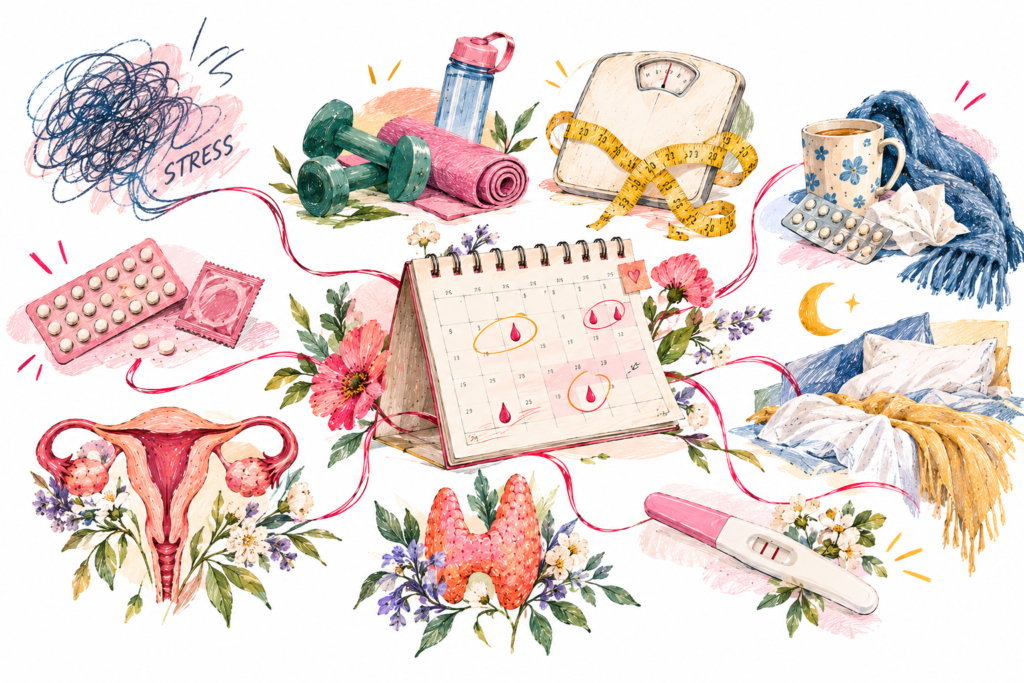
Pregnancy is another possibility when a period is unexpectedly late and pregnancy is possible. Conditions including PCOS and thyroid disorders can also cause recurring changes in menstrual timing.
That does not mean every late period is a hormone problem. Sometimes cycles vary. A cycle can be predictable for months and then shift unexpectedly.
When Should I See a Doctor?
It is worth speaking with a doctor if your periods have become consistently irregular, you repeatedly have cycles shorter than 21 days or longer than 35 days, your bleeding lasts more than seven days, or you bleed between periods.
Also mention other changes such as unusual facial hair, significant weight changes, tiredness, or difficulty becoming pregnant.
When Is It Urgent?
An early or late period by itself usually isn’t an emergency. Seek urgent medical care if you have very heavy bleeding, particularly if you are soaking through a pad or tampon every hour for several hours, or if heavy bleeding comes with dizziness, fainting, weakness, or feeling very unwell.
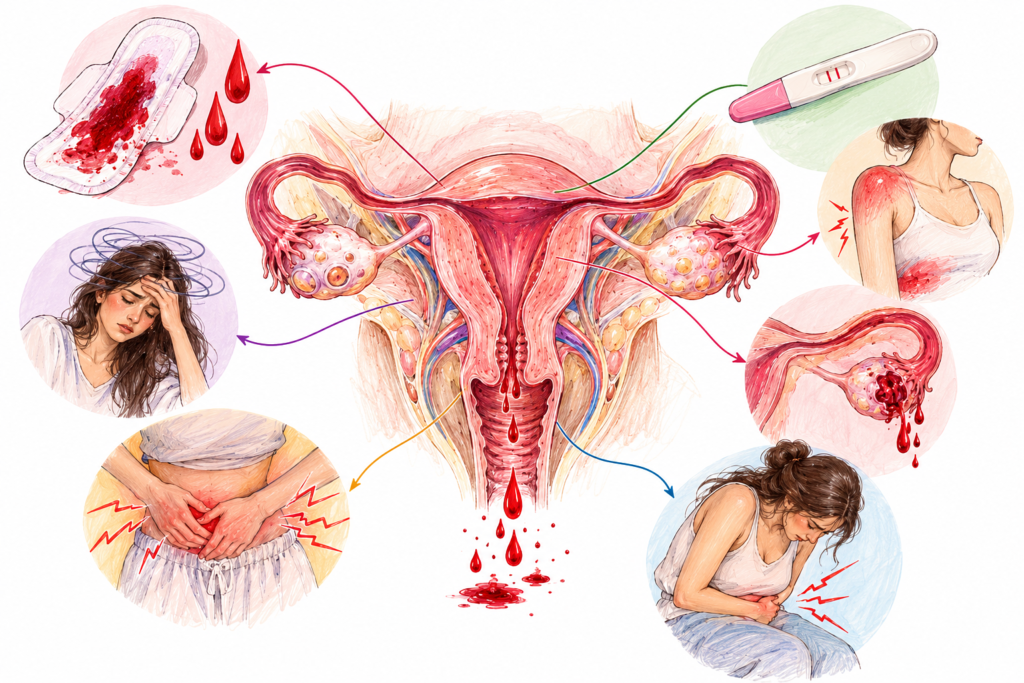
Severe or suddenly worsening pelvic pain also deserves urgent assessment, especially if it is much worse than your usual period pain.
If pregnancy is possible, unusual bleeding with severe abdominal pain, shoulder pain, dizziness, or fainting should be assessed urgently because some pregnancy complications can be serious.
Should I Track My Period?
Yes, but use tracking to understand your body rather than to make yourself anxious. Note the first day of each period, how long bleeding lasts, and anything unusual such as spotting, unusually heavy flow, or significant pain.
After a few months, you may notice that your “random” periods actually follow a pattern.
Most importantly, you do not need a predictable 28-day cycle to have a normal menstrual cycle. Your body is not a calendar.
A few days early or late can be variation. Persistent changes, unusual bleeding, severe pain, or symptoms that affect your daily life deserve attention.
You don’t have to panic every time your period arrives early or refuses to arrive on schedule. Learn your pattern, listen when your body changes, and know when a change deserves medical attention.