
Fantasy and Real Sex Are Two Different Experiences
Fantasy gives you complete control over the situation. You decide what happens, when it happens, how far it goes, and when it stops. There is no pressure to respond to another person’s expectations or worry about how your body looks.
Real sex is much more unpredictable. You have another person’s body, reactions, smells, touch, expectations and emotions in the room. Something that feels exciting in your imagination may feel completely different when you experience it physically.
That doesn’t automatically mean you aren’t attracted to your partner or that something is wrong with you.
You May Have Responsive Desire
Many people expect sexual desire to work like a switch: I want sex → we start → I become aroused.
For some women, it works in almost the opposite direction. Desire can appear after arousal and stimulation have already begun. This is called responsive sexual desire. That means not feeling intensely horny before or at the beginning of sex doesn’t necessarily mean you don’t want intimacy.

But there is an important distinction: responsive desire is not a reason to push yourself through sex you don’t actually want. You should always be able to stop.
Your Brain May Be More Excited Than Your Body
You can genuinely enjoy sexual thoughts while your body isn’t responding in the same way during partnered intimacy.
Stress, tiredness, anxiety, body-image worries, relationship problems, hormonal changes, medications and some medical conditions can affect sexual interest and arousal. You might also discover that the things that turn you on mentally aren’t the things that make your body feel good physically.
Ask yourself: “At exactly what point do I lose interest?”
Is it when your partner touches you? When kissing begins? When you feel expected to perform? When penetration is about to happen? When you notice your own body? The answer can reveal much more.
Pressure Can Kill the Desire You Were Feeling
The moment sex becomes something you are supposed to enjoy, your attention can move from pleasure to performance.
Am I taking too long? Do I look attractive? Does my partner think I’m into this? Why aren’t I more turned on?
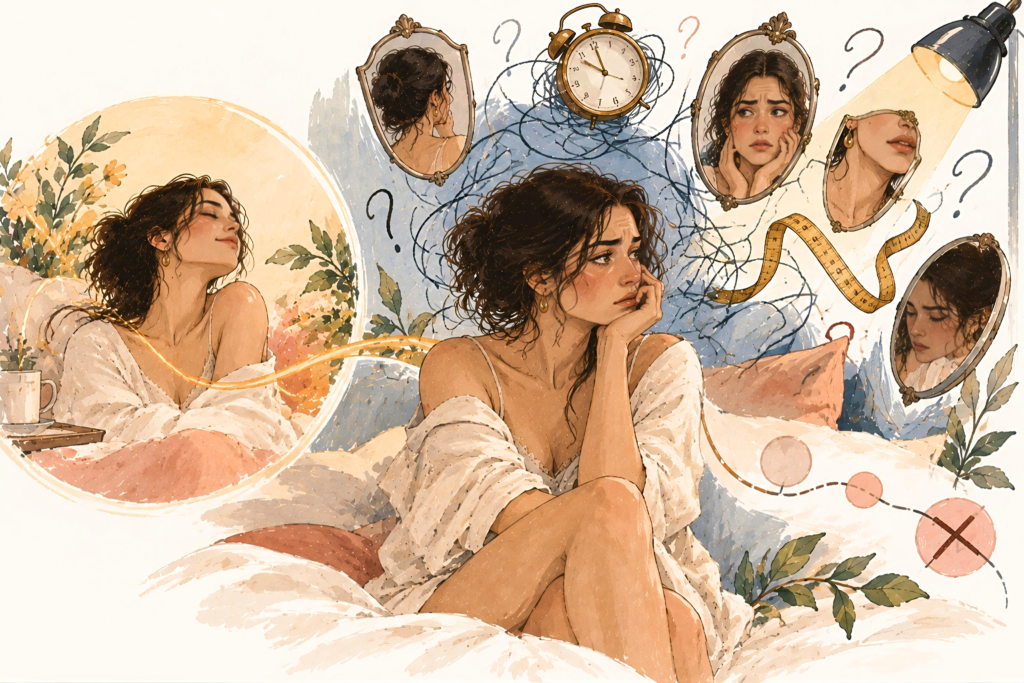
That mental commentary can pull you completely out of the experience. Sexual anxiety can interfere with both interest and pleasure, creating a cycle where worrying about sex makes sex harder to enjoy the next time. Sometimes the most useful change is removing the expectation that touching has to lead to intercourse or orgasm.
Pay Attention If This Happens Every Time
Occasionally losing interest is not automatically a sexual disorder. Desire naturally changes with circumstances and throughout life. But if partnered sex consistently feels unpleasant, painful, emotionally uncomfortable, or like something you have to endure, don’t simply force yourself through it.
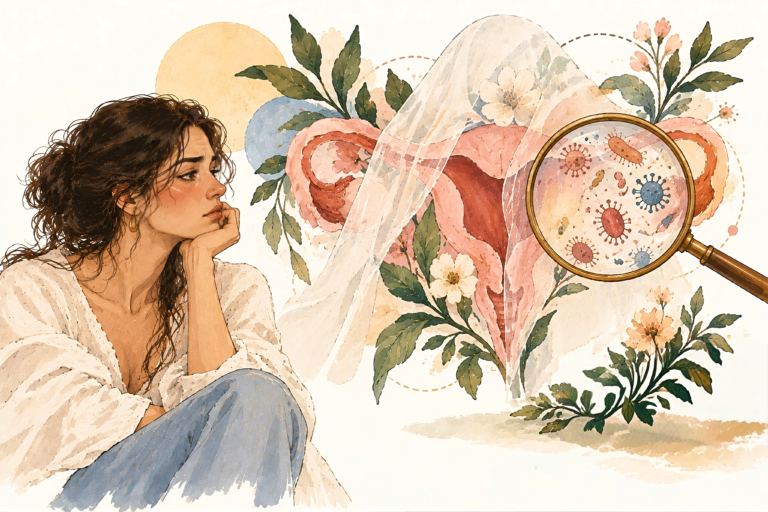
Pain, vaginal dryness, anxiety, past negative sexual experiences, relationship difficulties and some medications can all affect sexual desire and satisfaction.
You may benefit from talking with a gynecologist, sexual-health clinician or sex therapist, particularly if the change is persistent or distressing. And you don’t have to prove that your desire is “real” by having sex when you don’t want it.
Wanting sex in your imagination and wanting it in reality can be different experiences. The goal isn’t to force them to match. It’s to understand what your mind wants, what your body responds to, and what makes you actually feel comfortable and turned on.