
“I sleep for eight hours, but I still wake up tired. I can get through the morning, but by afternoon I feel like I could lie down again. I keep thinking I just need more sleep, yet even when I get enough, I don’t feel rested. Why am I so exhausted all the time?”

Getting eight hours of sleep doesn’t always mean you’ve had restorative sleep. The quality of your sleep, your daily routine, your mental state, medications, can all affect how energetic you feel.
Feeling tired after a few bad nights is normal. But when exhaustion becomes your everyday baseline, it’s worth looking beyond your bedtime.
Could I Be Sleeping, But Not Sleeping Well?
You can spend eight hours in bed without getting eight hours of good-quality sleep. Repeated awakenings, an inconsistent sleep schedule, insomnia, alcohol, caffeine late in the day, or an uncomfortable sleep environment can leave you exhausted the next morning.
Sleep apnea is another possibility, especially if you snore loudly, wake up gasping or choking, have morning headaches, or feel extremely sleepy during the day.
People may not realize their sleep is being interrupted because the awakenings can be very brief.
Could Stress or Burnout Be Draining Me?
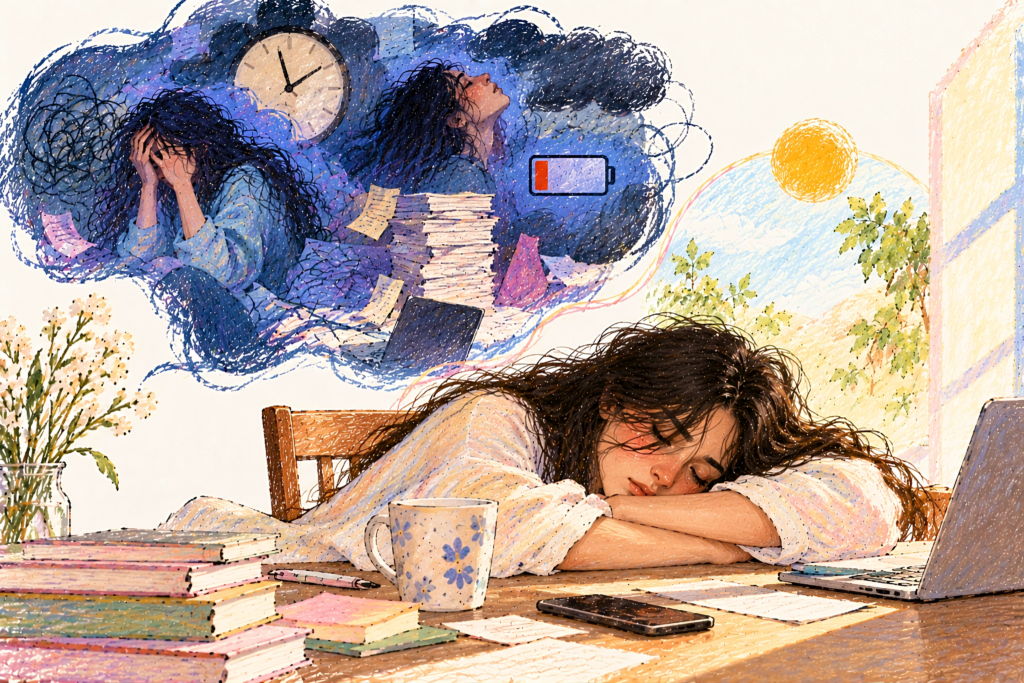
Sometimes your body is resting while your mind isn’t. Ongoing stress, anxiety, emotional exhaustion, grief, or low mood can make you feel physically drained even when you’re spending enough hours asleep.
You may notice that tasks suddenly feel harder, concentrating takes more effort, or you feel tired before the day has properly started.
That doesn’t mean the fatigue is “just in your head.” Mental and emotional strain can genuinely affect energy and sleep.
Could Something Physical Be Causing It?
Persistent fatigue can sometimes be linked to an underlying health problem. Iron-deficiency anemia, thyroid disorders, diabetes, infections, vitamin deficiencies, medication side effects, and other conditions can cause ongoing tiredness.
If you also have symptoms such as breathlessness, palpitations, dizziness, unusual thirst or urination, unexplained weight changes, feeling unusually cold, hair changes, or changes in your periods, mention them to a doctor.
Don’t start taking iron or other supplements because you’re tired. The cause matters, and testing can help identify what is actually going on.
When Should I Get Checked?
If you’ve been tired for a few weeks without knowing why, or the fatigue is affecting work, studies, exercise, relationships, or everyday tasks, it’s reasonable to make a medical appointment.
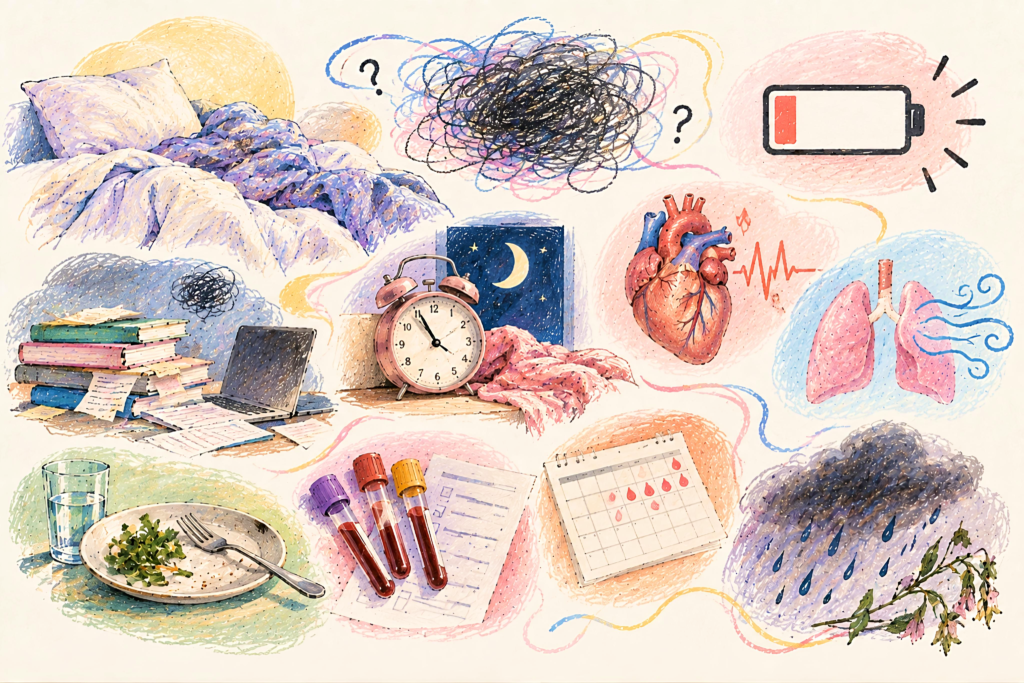
A doctor may ask about your sleep, diet, medications, mood, menstrual history, and other symptoms. Depending on your situation, blood tests may be used to check for problems such as anemia, diabetes, or thyroid disease.
Seek urgent medical help if severe fatigue occurs with chest pain, significant shortness of breath, a very fast or irregular heartbeat, fainting or near-fainting, severe pain, unusual bleeding, or a severe headache.
What Can I Do While I Figure It Out?
Start with the basics without blaming yourself. Keep your sleep and wake times consistent, eat regular balanced meals, stay hydrated, move your body regularly, and pay attention to caffeine, alcohol, and late-night screen use.
Also notice patterns. Are you exhausted after certain activities? Do you wake feeling unrefreshed? Is your fatigue worse around your period or during stressful weeks? Those details can be useful.
Eight hours of sleep is a good starting point, not a guarantee that you’ll feel energetic.
If you’re exhausted despite getting enough sleep, don’t keep telling yourself you’re simply lazy or need to try harder. Persistent fatigue is a symptom worth understanding.