I don’t think I’m being dramatic. There is something about walking home alone after dark that makes me notice every person behind me, every car that slows down, and every stretch of road where there is nobody around.

Maybe you’ve had an uncomfortable encounter before. Maybe nothing has happened, but you still feel uneasy. You don’t have to choose between pretending you’re fearless and being terrified walking home alone.
A few practical habits can give you options if something feels wrong. None of them are about blaming you for someone else’s behavior.
Can I Make My Route Safer?
The shortest route is not automatically the safest one at night. Before leaving, choose well-lit streets with other people around when possible.
Avoid isolated shortcuts through parks, alleys, empty lots, or unfamiliar areas. Know places where you could step inside if you suddenly felt uncomfortable, such as a shop, restaurant, security desk, or other staffed place.
Police guidance recommends planning ahead, using well-lit and busy routes, and knowing where you can get help.
Knowing your route also means you’re not standing on a quiet street trying to work out where to go.
Should Someone Know I’m Walking Home?
Let someone you trust know when you’re leaving and when you expect to arrive.
Send a simple “Leaving now” message, share your location for the journey, or arrange for someone to check that you’ve arrived. If you’re walking somewhere unfamiliar or particularly late, this gives you another option if you need help.
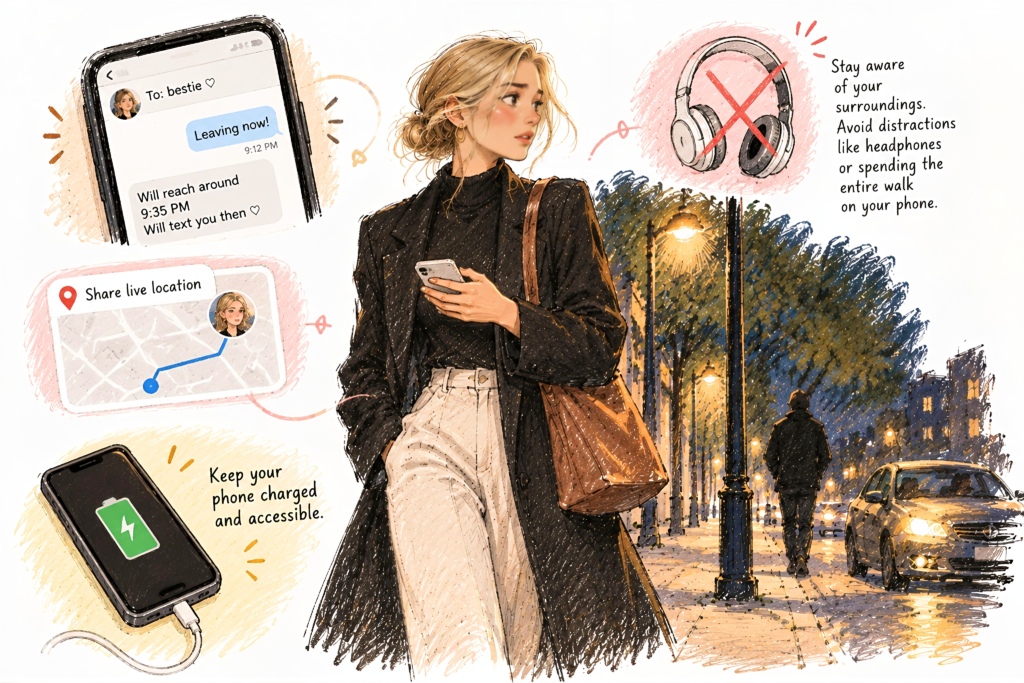
Keep your phone charged and accessible, but don’t spend the entire walk staring at it. Safety guidance recommends staying aware of your surroundings and avoiding distractions from phones or headphones.
What If Someone Is Making Me Uncomfortable?
You don’t have to wait until you can prove that someone is dangerous.
If someone keeps walking behind you, repeatedly approaches you, or simply gives you a bad feeling, create distance. Cross the street, change direction, move toward other people, or go inside a business.
If you think you’re being followed, don’t walk straight to your home. Keep moving toward a busy place and ask for help. Police guidance recommends going somewhere busy or knocking on a door if you believe someone is following you.
You don’t need to worry about looking rude. Your safety matters more.
What Should I Do If I’m in Immediate Danger?
This is worth planning in advance.
If someone approaches aggressively, create distance and move toward people. Use your voice if necessary. You can clearly say, “Stay away from me,” or call out for help.
If someone follows you, enter a staffed public place and explain what is happening. If you are threatened or in immediate danger, contact your local emergency services.
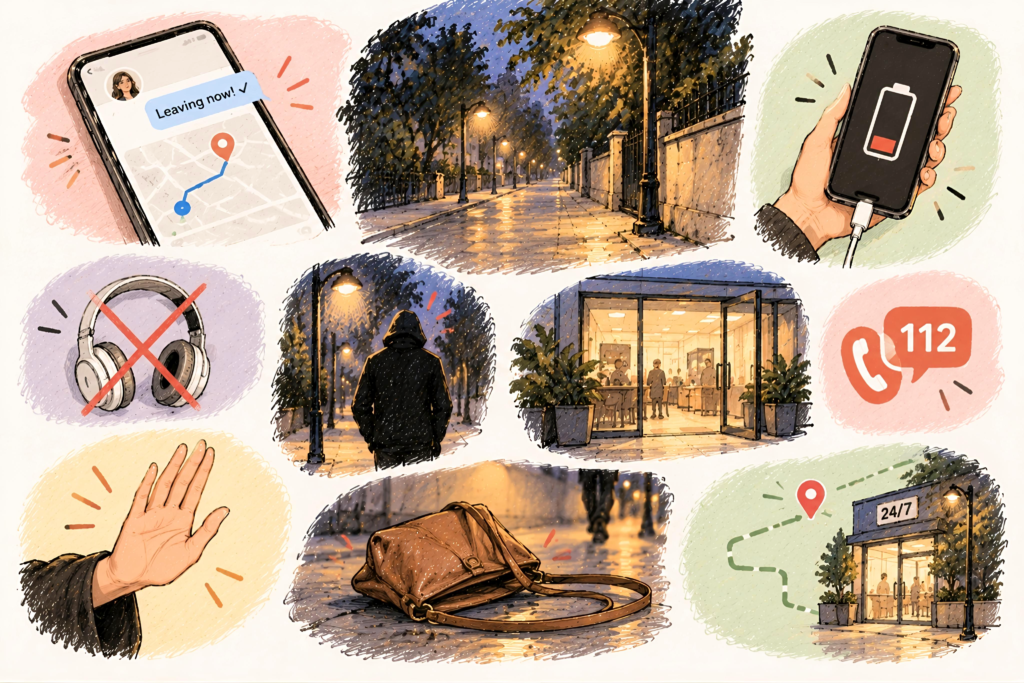
If someone tries to take your phone, bag, or other belongings, your safety is more important than protecting property. Police guidance notes that giving up belongings can sometimes be safer than getting into a physical confrontation.
Have your local emergency number saved or memorized, and know at least one safe place along your usual route.
What Should I Carry With Me?
Keep the basics easy to reach: a charged phone, your keys, and enough money or access to payment for an alternative way home. A personal safety alarm can be another option if it is legal and appropriate where you live.
You don’t need to carry a weapon because someone online told you to. Laws differ, and carrying something can create risks. If you choose a safety device, know how it works before you need it.
Choosing a taxi, ride, public transport, or asking someone to pick you up is also a safety decision. You don’t have to prove you can walk home alone.
Being careful doesn’t mean living in fear. It means having a plan.
If something feels wrong, you should leave before you have all the answers. Cross the street. Go somewhere busy. Call someone. Ask for help. Get home another way. You don’t need to wait for a situation to become dangerous before deciding that you deserve to feel safe.