
I feel completely normal and don’t have itching, unusual discharge, sores, or pain. But I’ve had sexual contact that makes me wonder whether I could have an STI without knowing it.

Yes, You Can Have an STI Without Knowing It
One of the confusing things about sexually transmitted infections is that they don’t always announce themselves.
The World Health Organization says the majority of STI’s have no symptoms, and its 2025 guidance specifically highlights how many infections remain undetected, particularly in women and in infections affecting areas outside the genitals.
So feeling healthy cannot tell you with certainty whether you have an STI.
Some Infections Are Particularly Easy to Miss
Chlamydia is often asymptomatic, especially in women. Syphilis can also cause no noticeable symptoms or symptoms that are easy to overlook. Herpes is another example: many people have no symptoms or don’t recognize mild symptoms as herpes.
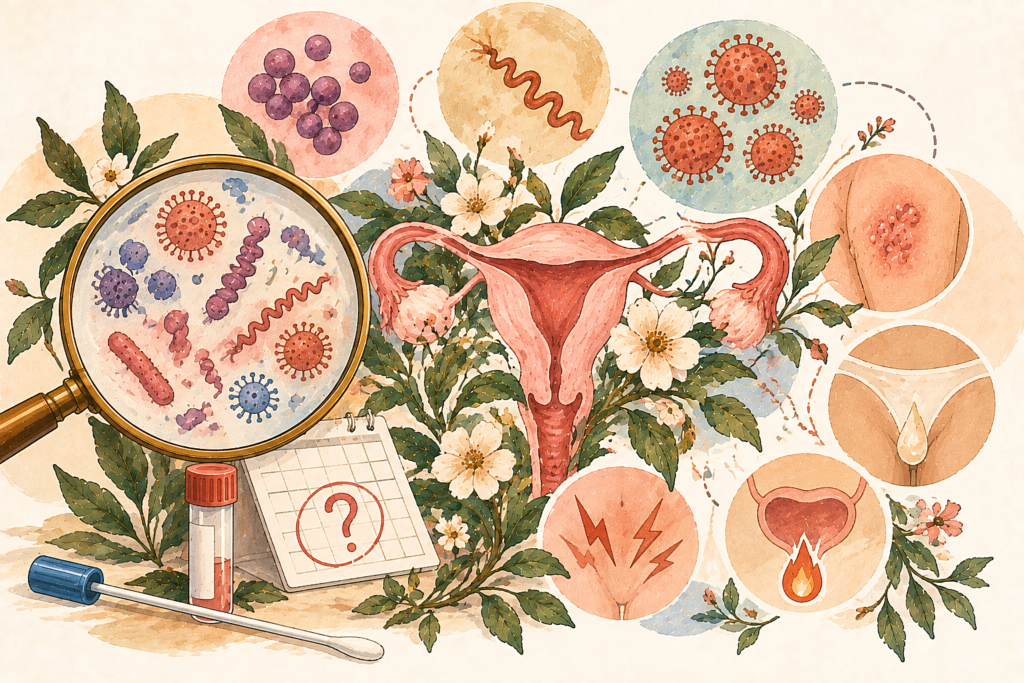
When symptoms do appear, they can include unusual vaginal discharge, burning when urinating, genital sores or lumps, lower abdominal pain, or other changes. But the absence of these symptoms doesn’t rule an infection out.
You Can’t Always Tell From Your Body
It’s natural to look for clues: Does everything look normal? Does it smell normal? Do I feel okay?
The problem is that STI symptoms overlap with many ordinary vaginal or urinary problems, while some infections cause no noticeable changes at all. That makes self-checking unreliable. Even a woman who feels completely healthy may have an infection that requires testing to detect.
And having an STI doesn’t automatically tell you when you acquired it. Some infections can remain unnoticed for a long time, so a positive result isn’t necessarily evidence of something that happened recently.
Testing Can Tell You What Symptoms Can’t
If you’re worried because of a new partner, sex without a condom or other barrier, a partner who has an STI, or another sexual exposure, speaking with a healthcare professional can help you decide which tests are appropriate.
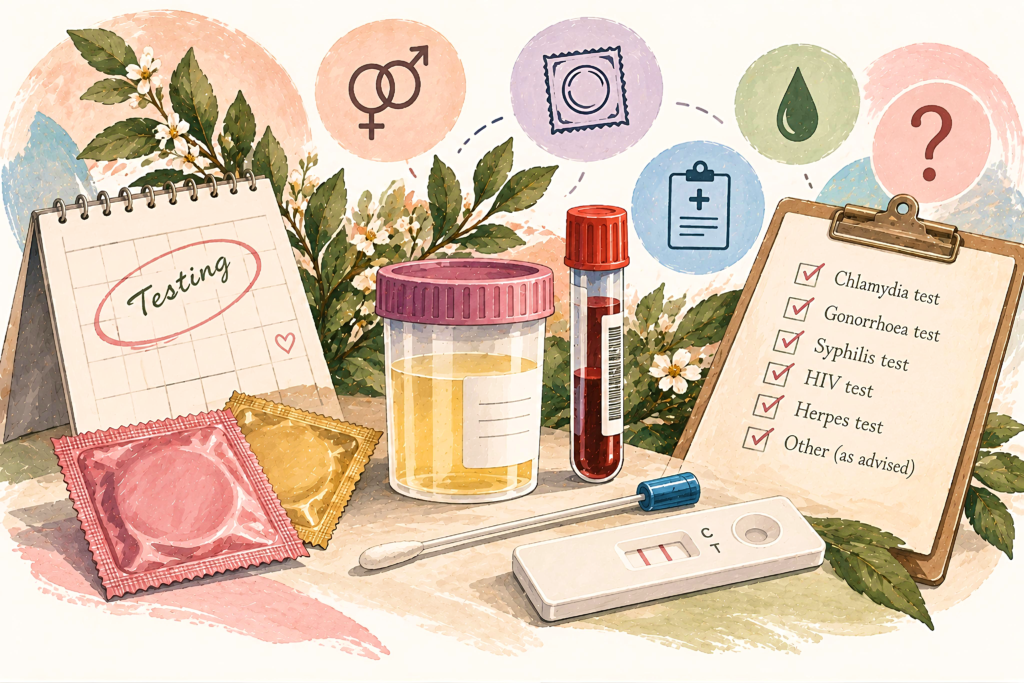
There isn’t one universal STI test that checks everything. Testing depends on your sexual history, symptoms, type of sexual contact, and other factors. Depending on the infection, testing may involve urine, blood, or swabs from specific body sites.
You don’t need to wait until something feels wrong before asking about testing.
Don’t Let “I Feel Fine” Be Your Only Reassurance
There is no reason to panic simply because you’ve had sexual contact. But there is also no reliable way to use the absence of symptoms as proof that you’re STI-free.
If you have a reason to be concerned, getting appropriate testing can replace weeks of guessing with an actual answer. If an infection is found, many bacterial STI’s are curable, while viral infections can often be managed with treatment. Early diagnosis can also help prevent complications and transmission to partners.
Condoms and other barrier methods can reduce the risk of many STI’s, and vaccines can prevent some infections, including HPV and hepatitis B.
You don’t have to feel sick to take your sexual health seriously. Sometimes the most reassuring answer comes from a test, not from waiting for symptoms.