I can spend money on groceries, bills, gifts, family, and things everyone else needs without thinking twice. But when I want to buy something just for myself, even something small, I start calculating whether I really need it. I might put it back, wait another week, or buy it and then feel guilty afterward. Sometimes I have enough money. I just can’t seem to enjoy spending any of it on me.
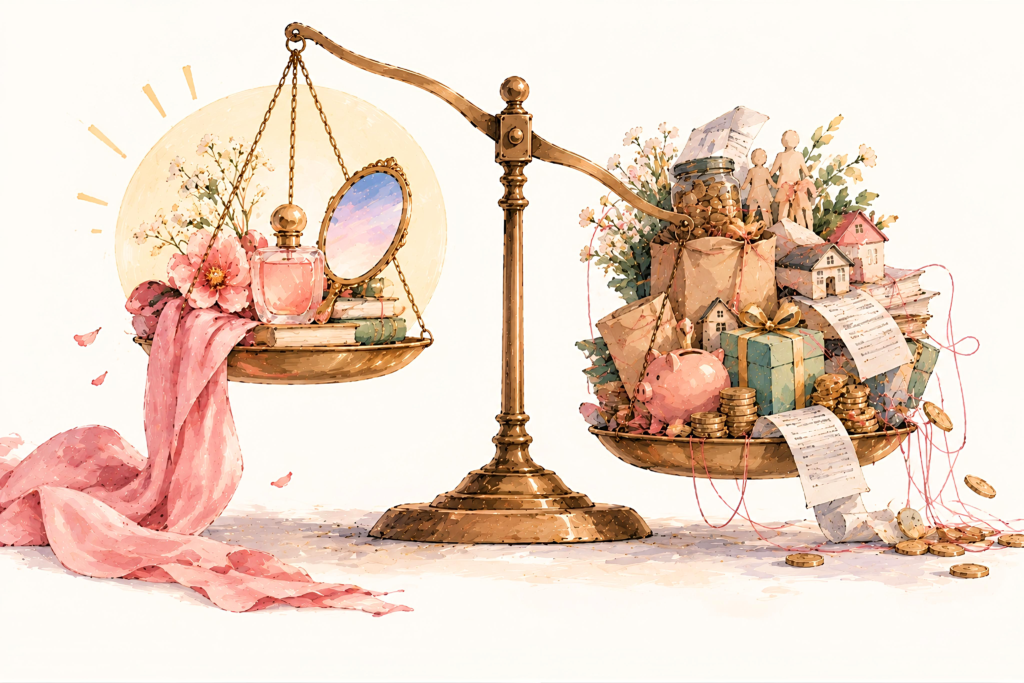
You may be saving responsibly, paying your bills, and still feel irresponsible for buying yourself a dress, ordering dinner, getting your hair done, or spending money on something that simply makes your life nicer.
That doesn’t automatically mean you have a money problem. Sometimes the problem is the meaning you’ve learned to attach to spending on yourself. Early experiences and family attitudes toward money can shape how comfortable we feel spending later in life.
Am I Actually Worried About Money, or Do I Feel Selfish?
If buying something means you won’t be able to pay a bill, cover an upcoming expense, or maintain the savings you need, the discomfort is useful. Your finances are telling you to pause.
But what if the purchase fits comfortably within your budget and you’re still hesitating. That deserves a different question.
Instead of asking only, “Can I afford this?”, Ask: “If someone I loved spent this same amount on something reasonable for themselves, would I think they were irresponsible?”
If you’d immediately tell them it was fine, but you hold yourself to a completely different standard, your guilt may not be about the purchase.
Why Is Spending on Everyone Else So Much Easier?

You might have grown up watching people treat personal wants as something that comes after everyone else’s needs.
Perhaps money was tight. Perhaps you learned that being “good” meant being useful, practical, generous, or self-sacrificing.
Over time, those lessons can become automatic.
A gift for someone feels generous. Helping family feels necessary. But buying yourself something nice? Suddenly you need a justification.
That pattern is common enough that recent discussions among women describe feeling guilty even over very small personal purchases despite earning their own money.
Give Your Money a Place for You
Give personal spending a structure. After covering essentials, savings, debt payments, and other important goals, create a specific amount that belongs to you. It can be small.
The important part is that you decide the amount before you’re standing in a shop arguing with yourself.
Then a purchase from that category isn’t a financial failure. It is exactly what that money was set aside to do.
A planned spending allowance can make personal spending feel less like breaking a rule and more like following your own financial plan.
Stop Requiring Every Purchase to Be Necessary

You may be comfortable buying something if you can prove that you need it. But what about something you simply want?
A meal you could have cooked at home, a skincare product you enjoy, a hobby you don’t need for your career.
Not everything you spend money on has to solve a problem.
Money can pay for comfort, convenience, enjoyment, experiences, and things that make your ordinary life feel a little better.
Being financially responsible doesn’t mean squeezing usefulness out of every dollar.
What If I Feel Guilty After Buying It Anyway?
Don’t immediately return the item just because the guilt appeared. Give yourself time to notice what is actually happening.
Look at your budget. Check that the purchase hasn’t damaged an important financial goal. If everything is still on track, remind yourself that feeling guilty doesn’t necessarily mean you’ve done something wrong.
The feeling may simply be familiar. You are changing a habit that may have been with you for years.
Start small. Spend a little on yourself deliberately. Notice the discomfort without automatically obeying it. Then do it again.
You don’t need to become someone who spends without thinking. Be someone who can spend thoughtfully without treating every personal purchase like a moral decision.
You worked for your money. Saving some of it is responsible. Spending some of it on your own life can be responsible too. You don’t have to earn the right to enjoy everything you earn.